We use cookies to improve your browsing experience, support the operation of this site, and understand how visitors use our content. You can accept all cookies, accept only essential cookies, or deny non-essential cookies. Privacy Policy
Vectoring AI
A hands-on guide to building, testing, and deploying Model Context Protocol servers with Python — tools, resources, prompts, transports, and production hosting
State machines, conditional routing, cycles, and human-in-the-loop checkpoints for retrieval workflows
Designing modular, reusable agent capabilities — from tool engineering and prompt crafting to skill bundles and the Agent Skills standard
Implementing the Reason-Act loop with tool calling, observation parsing, and stopping conditions in LangGraph and LlamaIndex
Iterative retrieval loops, web search integration, self-reflection, source triangulation, and automated report generation
Durable execution, crash recovery, scaling agent workers, streaming intermediate results, and cost monitoring
A practical catalogue of architectural patterns — from reflection and tool use to multi-agent collaboration — for building reliable, production-grade LLM agents
Trajectory-level scoring, tool-call accuracy, LangSmith traces, agent benchmarks, and failure root-cause analysis
Input validation, tool-call authorization gates, sandboxed execution, budget limits, and prompt injection defense
Human in the Loop, Human on the Loop, Human over the Loop — choosing the right level of autonomy for AI agents in production
Conversation buffers, working scratchpads, episodic vector recall, and cross-agent memory sharing for persistent agent state
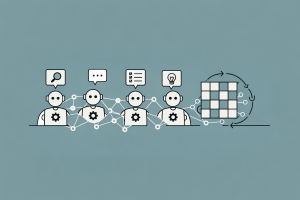
Supervisor, swarm, and hierarchical topologies for coordinating specialized retrieval agents
Plan-and-execute agents, sub-question generation, and multi-hop retrieval over heterogeneous data sources
From OpenAI function calling to MCP — building dynamic tool selection for SQL, API, and vector search retrieval
Understanding agent harnesses — the systems layer that turns raw LLM intelligence into production agents — from core primitives and middleware to continual improvement loops